

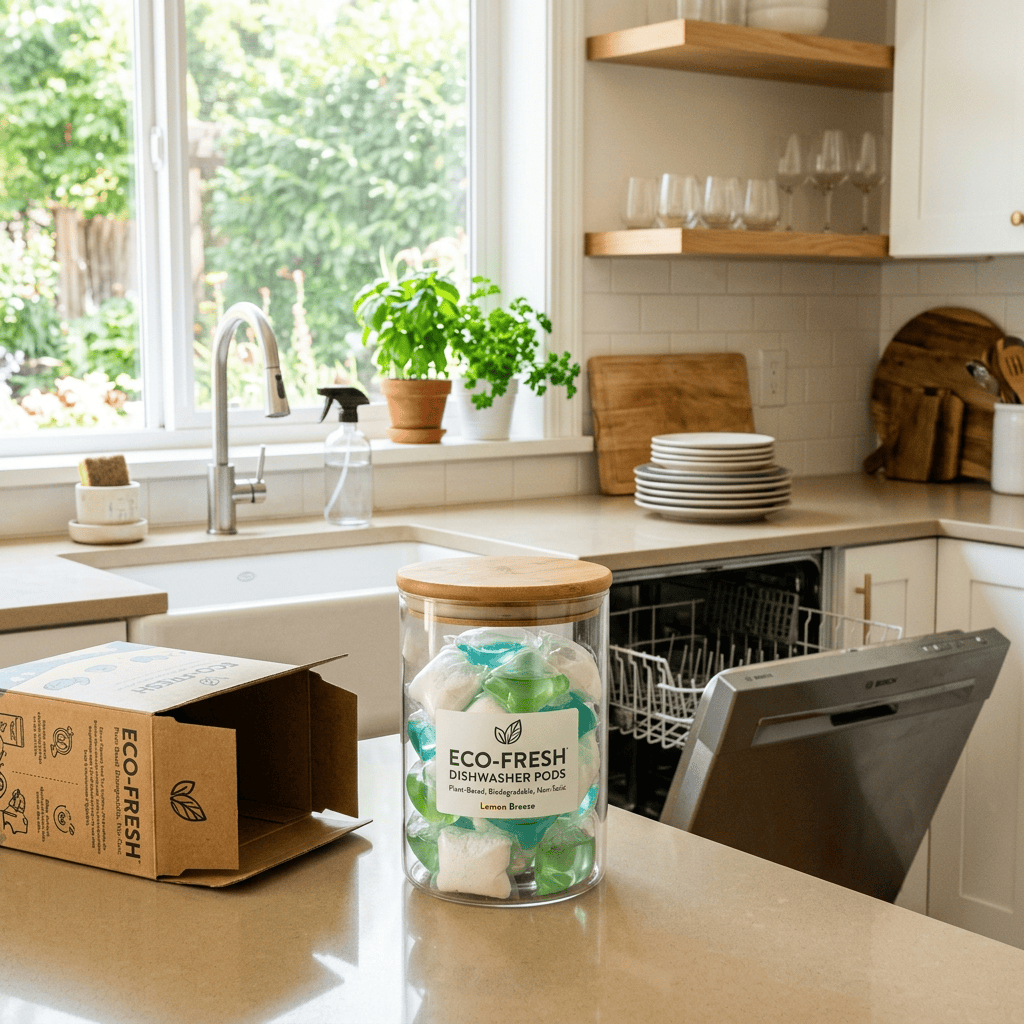
A practical, ingredient-level guide to choosing dishwasher pods that clean well and are eco-friendly to the planet.
Why This Category Is Confusing
Most pod boxes in the cleaning aisle today are slapped with “eco-friendly” labels, but the products underneath are wildly different: in ingredients, packaging and how they actually behave once they go down the drain. Two things drive most of the confusion:
- The PVA debate. Nearly all dishwasher pods (green-marketed or not) use a dissolvable film made of polyvinyl alcohol (PVA) to hold them together. Industry groups and the EPA’s Safer Choice programme say detergent-grade PVA is biodegradable and not a microplastic. Independent researchers, including a widely cited 2021 Arizona State University study, found that most PVA survives wastewater treatment. Blueland’s marketing campaigns emphasise avoiding PVA, but the American Cleaning Institute disputes those claims, calling them exaggerated. Be sceptical of any brand claiming certainty in either direction, as the issue is a scientific and regulatory dispute.
- Ingredient labelling is inconsistent. “Plant-based” and “natural” aren’t regulated terms. A phosphate-free pod can still contain synthetic fragrance, dyes, or optical brighteners.
That’s why the best way to shop this category is to look beyond what is on the front of the box and check for three things: the ingredient list, the packaging material, and whether a legitimate third party has certified the product.
What “Eco-Friendly” Actually Covers
| Dimension | What to look for |
| Formula | Phosphate-free, plant- or mineral-derived surfactants, no chlorine bleach, no synthetic dyes or optical brighteners |
| Packaging | Plastic-free or PVA-free wrapping, recyclable/compostable cardboard, no single-use plastic tubs |
| Water safety | Biodegradable ingredients, septic-safe, low aquatic toxicity |
| Manufacturing/testing | Cruelty-free (not tested on animals), often vegan |
| Certifications | Third-party verified rather than self-declared |
Certifications Worth Checking For
- EPA Safer Choice – ingredients evaluated against EPA human/environmental health criteria
- USDA Certified Biobased Product – ensures that a defined percentage of the product’s content is renewable and plant-based
- EWG Verified – Environmental Working Group’s standard of ingredient transparency and safety
- B Corp – company-wide sustainability and labour standard, not product-specific
A pod with two or three of these certifications is a stronger signal that it’s an eco-friendly dishwasher pod than one based solely on marketing copy.
Things to Consider when buying a dishwasher pod
- Water hardness. Hard water (which is common in most parts of the Midwest, Southwest and parts of the Southeast) requires a pod with a built-in water softener or a separate rinse aid, or you’ll be left with white film on glassware no matter how “clean” the formula is.
- Soil load. Light daily loads can use a lighter formula, but households with a lot of baked-on or 24–48 hour dried food benefit from double-enzyme or oxi-boosted formulas.
- Fragrance sensitivity. If anyone in the house has skin or respiratory sensitivities, even “natural” scents can cause reactions. Buy fragrance-free.
- Cost per load. Premium PVA-free tablets cost 0.45/load, while budget eco pods cost 0.25/load. Premium PVA-free tablets cost 0.45/load, while budget eco pods cost 0.25/load. Bulk buying closes the gap.
- Packaging fit. Reusable-tin subscription models reduce packaging waste but require refills; single carton pods are simpler but generate more packaging.
- Septic system compatibility. If you use septic, make sure the formula is septic-safe.
Here are Some Eco-Friendly Dishwasher Pods You can Get Today: Pros & Cons
1. Blueland 100% Plastic-Free Dishwasher Detergent Tablets (Free & Clear, 60 ct)
Starting Price:
Available on Amazon; Buy Here
Naked tablets, packaged in a reusable Forever Tin. No PVA film whatsoever. Certified by EPA Safer Choice, USDA Biobased, Leaping Bunny and B Corp.
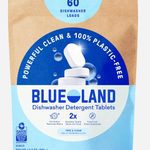
- Pros: Completely sidesteps the PVA debate; the reusable tin reduces packaging waste; has a strong certification stack; and is formulated for hard water.
- Cons: Cost per load (~$0.30+); naked tablets require dry hands and may clump in humid kitchens; refills require remembering to reorder.
2. Seventh Generation Free & Clear Dishwasher Detergent Packs (45 ct)
Starting Price:
Available on Amazon: Buy Here
A widely available enzyme-rich pack in a dissolvable PVA film, plant-based and at a price close to conventional pods.
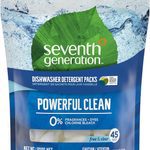
- Pros: USDA Certified Biobased, EPA Safer Choice certified, no dyes, synthetic fragrance, phosphates or chlorine bleach, competitively priced and easy to find.
- Cons: Still sealed in PVA film; some users say they wish there was a separate rinse aid for hard water; not as aggressive on very heavy baked-on messes as premium formulas.
3. Dropps UltraWash Dishwasher Pods (Fresh Rain, 120 ct)
Starting Price:
Available on Amazon: Buy Here
Mineral-based water softeners, not a plastic tub, with an 81% USDA Certified Biobased formula, delivered in recyclable paperboard.
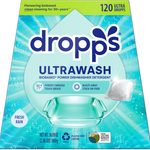
- Pros: No pre-wash or rinse aid; built-in water spot prevention; plastic-free outer packaging; B Corp, Leaping Bunny certified.
- Cons: Individual pods are still wrapped in PVA film; scented option might not work for fragrance-sensitive homes; subscription pricing is cheaper than buying individually.
4. Dropps UltraWash Plus Dishwasher Detergent Pods (Lemon Citrus, 64 ct)
Starting Price: $35
Available on Amazon: Buy Here
A triple-chamber, higher-strength version of Dropps’ formula with a built-in rinse aid designed for tougher, 24-hour stuck-on messes.
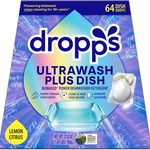
- Pros: Degreases better than original UltraWash line; glassware is nearly spot-free even without the addition of rinse aid; vegan, cruelty-free, septic-safe.
- Cons: Lower biobased percentage than standard UltraWash (61% vs. 81%); still PVA film; priced at the higher end of the category.
5. Grab Green Automatic Dishwashing Detergent Pods (Fragrance Free, 60 ct)
Starting Price: $13.5
Available on Amazon: Buy Here
A powder-fill pod brand that is built around full ingredient transparency – each ingredient and its purpose is listed on the package.
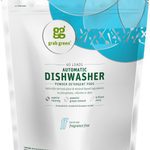
- Pros: Full “true transparency” ingredient labelling; no phosphates, chlorine, dyes, or masking agents; fragrance-free option is good for sensitive households; Leaping Bunny certified.
- Cons: Velcro-closure pouch (not fully plastic-free packaging); some users find it less effective on heavily baked-on food than enzyme-heavy competitors; smaller pack sizes cost more per load.
6. AspenClean Unscented Dishwasher Pods (28 ct)
Starting Price $:22
Available on Amazon: Buy Here
The first dishwasher pod to be EWG Verified and formulated with oxygen bleach and plant-derived ingredients.
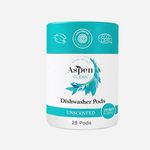
- Pros: Certified by EWG and ECOCERT; packaged in zero-plastic, compostable materials; unscented, safe for families and pets, and formulated without SLS, dyes, chlorine, or phosphates.
- Cons: Higher price point; modest 28-count size requires more frequent repurchasing; oxygen bleach blend may lag behind enzyme-based alternatives on heavy grease.
7. Molly’s Suds Dishwasher Pods (Unscented, 60 Auto-Release Tabs)
Starting Price: $18
Available on Amazon: Buy Here
Was developed by a pediatric nurse for households managing chemical sensitivities and allergies.
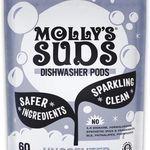
- Pros: Cruelty-free (Leaping Bunny certified), safe for septic systems, effective in hard and soft water according to the brand, and made with a simple formula free from ethoxylates..
- Cons: Contains PVA auto-release film, as verified by the brand in customer Q&A. Certain users note it is less effective on heavy grease than leading brands, potentially requiring pre-rinsing for heavily soiled dishes..
8. Puracy Dishwasher Pods (Free & Clear, 50 ct)
Starting Price: $10
Available on Amazon: Buy Here
An enzyme-driven pod popularised on TikTok that features plant- and mineral-based components formulated without dyes, bleach, or sulphates.
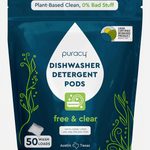
- Pros: Brand claims no pre-rinse necessary; widely available and reasonably priced; fragrance-free option performs well on glassware for buyers sensitive to smells.
- Cons: Customer Q&A has consistent complaints of excess sudsing/residue in some machines, particularly with water softeners; mixed reviews on grease-cutting power compared to mainstream brands; pods are individually wrapped in plastic film.
9. ATTITUDE Dishwasher Pods (Unscented, 70 ct)
Starting Price: $12.7
Available on Amazon: Buy Here
A Canadian plant-based brand with an “Ecodose” water-soluble film that minimises direct skin contact during handling.
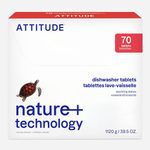
- Pros: Contains no phosphates or chlorine; comes in 100% recyclable FSC-certified cardboard packaging; works in both residential and commercial dishwashers; offers an unscented variant..
- Cons: Employs a dissolvable film wrapper; requires a separate rinse aid for optimal spot-free shine according to manufacturer recommendations; carries lower brand awareness compared to Blueland or Seventh Generation..
10. Sun & Earth Dishwasher Pods (Free and Clear, 20 ct, Pack of 6)
Starting Price: $
Available on Amazon: Buy Here
A more affordable natural pod option sold in bulk multi-packs, positioned as a value alternative to premium eco brands.
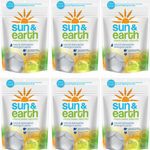
- Pros: Provides a lower cost per load compared to most boutique eco brands, is marked as safe for baby bottles and utensils by the manufacturer, and eliminates the hassle of measuring or unwrapping pods..
- Cons: Some customer feedback notes inconsistent individual packet quality and packaging issues; hard water may cause film on plastic containers; verify the fragrance-free formula against personal sensitivities.
11. Earth Friendly Products Free and Clear Automatic Dishwasher Pods (14.5 oz)
Starting Price: $
Available on Amazon: Buy Here
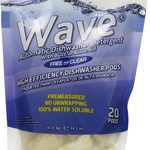
This is one of the longer-running eco cleaning brands, with a straightforward, no-frills free-and-clear formula.
- Pros: Long-standing brand featuring a solid history of sustainability; formula contains no added dyes or fragrances; offers competitive pricing among natural-based pods.
- Cons: Provides less published third-party certification detail than competitors like Blueland, AspenClean, or Seventh Generation; requires more frequent repurchasing due to the smaller container size; features fewer recent independent performance evaluations than larger eco-focused brands..
FAQ
Are eco-friendly dishwasher pods as effective as conventional ones?
Independent testing has shown that well formulated eco pods are usually within the 85-95% range of the cleaning power of conventional ones, and a few plant-based options have matched the best conventional brands in removing tough, dried-on foods. Pods frequently don’t stand up to powder and gel formats, particularly on baked-on stains.
Is the plastic film around pods actually a problem?
It is controversial. PVA film dissolves in water and breaks down in the wash cycle. The disagreement is about what happens next. Do the dissolved PVA molecules fully biodegrade in wastewater treatment (industry/EPA Safer Choice position), or do they substantially persist in the environment (position argued by some independent researchers and PVA-free brands)? If you want to avoid the debate altogether, opt for a PVA-free tablet or powder/gel form.
Are these pods safe around kids and pets?
Formula matters more than the “eco” label. Look specifically for dye-free and fragrance-free versions, and store any pod, i.e., eco or conventional, exactly like any household chemical should be kept out of reach of children, since concentrated detergent can still cause eye and skin irritation or be dangerous if swallowed.
Do eco pods work in hard water?
Only if they are formulated for it. If you have hard water, check if you have a built-in water softener or plan to use the pod with separate rinse aid, or expect spotting no matter how ‘natural’ the formula.
Are they septic-safe?
Many are but not all. Check the label for the actual product that it is septic safe, don’t assume that “eco-friendly” means the same thing.
Does “biodegradable” mean it’s safe to skip rinsing dishes into waterways or ignore water-saving settings?
No – biodegradable ingredients still need time and the right conditions to break down. If you want to run a full, efficient cycle in a dishwasher, that’s usually the lower-impact option compared to hand-washing under a running tap, regardless of the pod you choose. (ENERGY STAR-certified dishwashers typically use less water per load than handwashing.)
Are naked tablets (no wrapper at all) better than wrapped pods?
They eliminate the film question but require dry hands for handling and tend to clump in humid environments. If avoiding plastic is your number one concern and you’re happy to pay more per load, they’re a good choice.
Bottom Line
Choosing the best eco-friendly pod ultimately depends on your personal priorities regarding pricing, formula transparency, water hardness, and packaging options. When evaluating options, look for a phosphate-free formulation alongside a minimum of one trusted third-party certification (such as EPA Safer Choice, USDA Biobased, or EWG Verified). Furthermore, if eliminating plastic is your primary goal, consider opting for a wrapped pod alternative like a PVA-free powder or tablet.
