

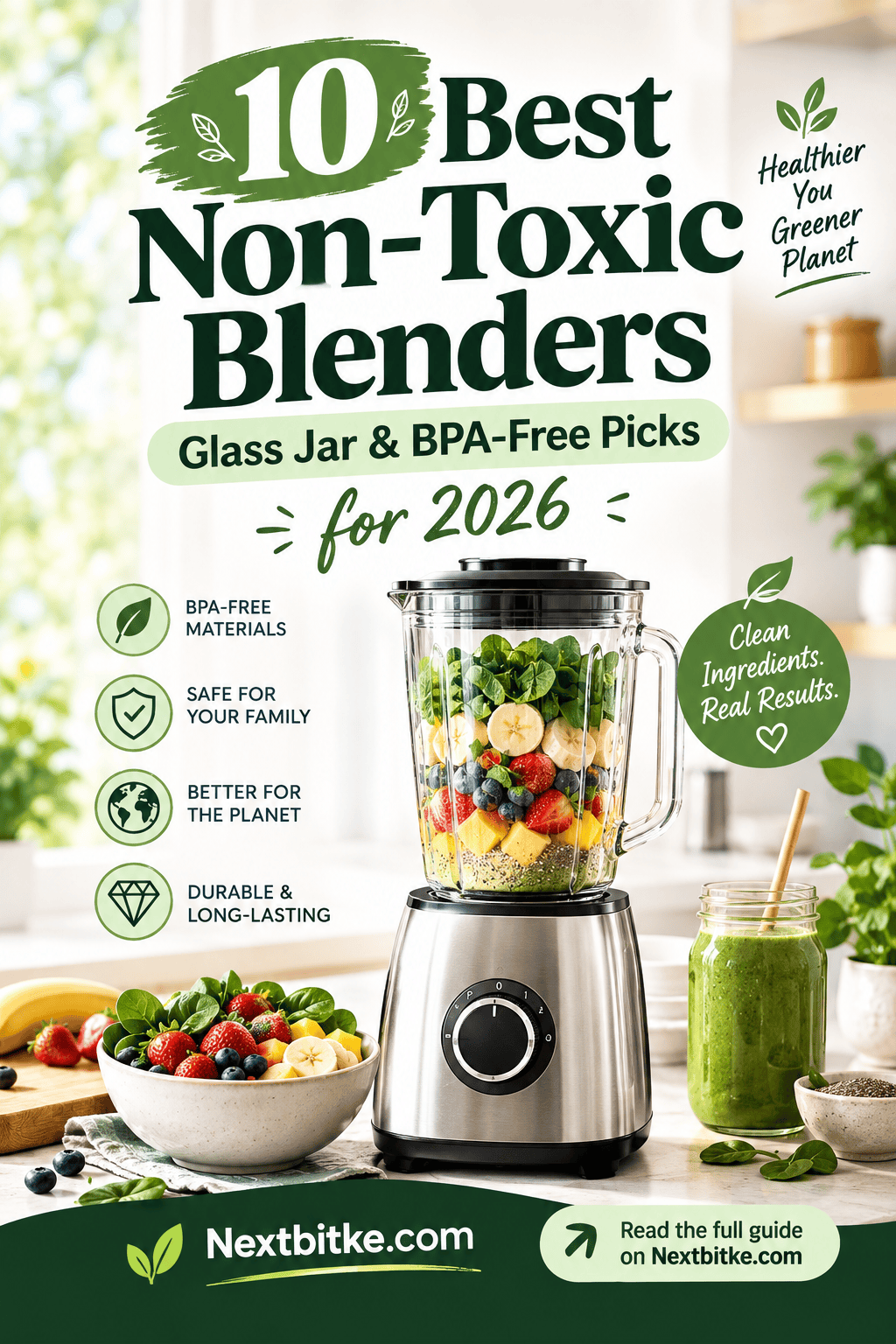
If you want a non-toxic blender that keeps harmful chemicals out of your food and daily green drinks, this guide is for you. We reviewed the best blender options, including BPA-free glass jar blenders, stainless steel blade options, and personal blenders with less plastic. Discover the best non-toxic blenders for your budget & lifestyle with clear pros, cons & direct links.
Why “Non-Toxic” Matters When Choosing a Blender
If you’re searching for a “BPA-free glass jar blender” or “non-toxic blender for smoothies”, your primary goal is probably to avoid bisphenol A (BPA) and other plastic chemicals from leaching into the foods and drinks that you consume daily. Inferior plastics can degrade faster with extended use of the blender, especially when blending hot ingredients, acidic fruits or at higher speeds that generate frictional heat. Here’s why the best non-toxic blender suggestions, including ours, focus on:
- Glass jars instead of plastic pitchers (the gold standard of plastic-free blender jars)
- Stainless steel blades, which don’t leach and resist corrosion
- BPA-free Tritan or copolyester as an acceptable middle ground when glass isn’t practical (portable blenders, high-powered blenders with impact-resistant needs)
- Stainless steel motor housings over painted plastic shells, where available
No blender is truly 100% plastic-free. Even glass jar blenders will typically have a plastic or silicone gasket, base, or lid ring. The realistic goal of a “non-toxin kitchen blender” is to reduce the plastic that actually touches your food and smoothie, not to eliminate every gram of plastic in the appliance.
What to Look for in the Best Non-Toxic Blender on the Market
- Jar material: Glass (e.g., Oster’s Boroclass or generic borosilicate-style glass) has the lowest food-contact plastic profile. The runner-up is BPA-free Tritan copolyester used by Vitamix, KitchenAid and Zwilling. It’s inert and doesn’t contain BPA, but it’s still a plastic.
- Blade material: Stick with stainless steel blades, virtually universal at this point, but worth confirming on off-brand blenders.
- Wattage for smoothies: 500–700W is enough for daily fruit-and-yoghurt smoothies; 1000W+ is worth it if you’re regularly blending frozen fruit, ice, or fibrous greens like kale and stems.
- Dishwasher-safe glass: Make sure the glass jars you select are either “thermal shock tested” or “shatterproof.” This means they can move from a hot dishwasher to a cold ice-blending without breaking.
- Warranty length: A longer warranty (5–10 years on motors) is often a proxy for how seriously a brand stands behind durability, which is useful since a “non-toxic blender” you have to replace every year isn’t actually the lower-waste option.
The 10 Best Non-Toxic Blenders
1. Best Overall Glass Jar Blender: Oster Pro 1200 Smoothie Blender with Glass Jar & 24 oz To-Go Cup
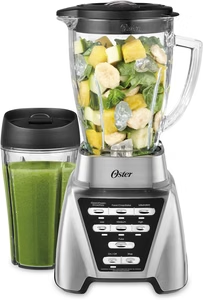
The Oster Pro 1200 Smoothie Blender gives you the power you need for full batches and quick single servings and more. Features Dual Direction Blade Technology that pulls ingredients down for smooth and precise results with 1200-watt motor. This one comes with a big 6 cup glass jar for big recipes and a portable 24 oz to-go cup.
- Pros: Boroclass glass jar is thermal shock resistant (dishwasher-safe to ice-blending); 900 watts for crushing ice; 10-year Duralast all-metal drive warranty; comes with a 24 oz to-go smoothie cup for grab-and-go mornings.
- Cons: To-go cup that comes with it is plastic, not glass; 1200W is louder than less powerful glass blenders; Glass jar is heavier and less travel-friendly than a Tritan jar.
2. Best Budget Non-Toxic Blender: Hamilton Beach Wave Crusher Blender with 40 oz Glass Jar
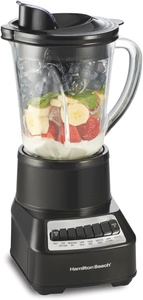
The Hamilton Beach Wave Crusher Blender guarantees you smooth results on drinks and foods. Its patented Wave Action system, powered by a 700-watt peak motor, constantly pulls the mixture down onto stainless steel Ice Sabre blades. It can handle icy drinks, purées and smoothies thanks to a thermal-shock tested 40-ounce glass jar and no-mess pour spout.
- Pros: 40 oz BPA-free glass jar at budget price point Stainless steel Ice Sabre blades 14 blending functions cover smoothies, purees and crushed ice 3-year limited warranty and motor life tested to 8,000 frozen drinks
- Cons: 700W is on the low end for very fibrous greens or dense frozen fruit; smaller 40 oz capacity than some competitors; plastic lid and base parts, so it’s low-plastic rather than plastic-free.
3. Best for Families/Large Batches: BLACK+DECKER PowerCrush Multi-Function Blender with 6-Cup Glass Jar
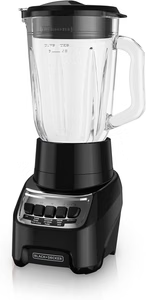
BLACK+DECKER PowerCrush Multi-Function Blender’s versatile crushing power makes it perfect for everyday meal prep and drinks. 700 watt peak motor and 4-tip QuadPro stainless steel blades pulverises ice, frozen fruit and greens with ease. A durable 6-cup PerfectPour glass jar dispenses without drips, and smart multi-speed options and pre-programmed settings deliver smooth, uniform results for every recipe.
- Pros: Glass jar, blade and lid are all dishwasher safe; 700W motor with a 4-tip stainless steel QuadPro blade can handle ice, purees and even dry crumbs; Hinged, spill-free pour spout; Easy Clean function loosens caked-on residue with just water and soap
- Cons: Only 4 speed settings, less granular control than more expensive models. Base won’t accept personal blending jars out of the box (sold separately). 700W doesn’t handle very hard ingredients like whole frozen fruit chunks as well as 1000W+ blenders.
4. Best Value Glass Jar Blender: Amazon Basics 700W Countertop Blender with 6-Cup Glass Jar
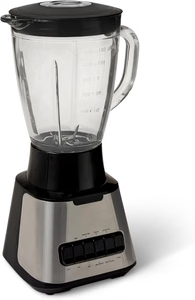
The Amazon Basics 700W Countertop Blender provides affordable power for everyday kitchen jobs. This machine features a 700-watt peak motor that easily blends smoothies, milkshakes and sauces. The durable 6-cup (48 oz) glass jar has clear measurement markings. Multi-speed settings and a pulse control option deliver quick, reliable power to make food preparation simple and hassle-free.
- Pros: Real 50 fl oz glass jar at one of the lower price points in this category; stainless steel blades; 6 pre-programmed functions make it easy for daily use; simple, minimal plastic design.
- Cons: Doesn’t have many third-party reviews or as long of a track record as legacy brands like Oster or Hamilton Beach; customer support and replacement parts might be harder to find long-term; 700W ceiling makes using it for very hard ingredients like ice-heavy frozen drinks difficult.
5. Best Professional-Grade Pick: Vitamix Explorian E310
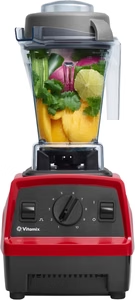
Vitamix Explorian E310 offers high-performance blending in a compact, handy design. A powerful 2.0-peak HP motor effortlessly pulverises fibrous greens, frozen fruit, and dense nuts. You can manually control smooth purées, chunky salsas, and velvety soups with its intuitive controls and 10-speed variable dial and pulse function. The 48-ounce container fits under standard kitchen cabinets and makes small-to-medium batches. The E310 offers professional power at an entry-level price with aircraft-grade stainless steel blades, self-cleaning, and durable construction.
- Pros: 2-horsepower motor easily chops fibrous greens, frozen fruit and nuts; laser-cut stainless steel blades built to last for years; self-cleaning cycle; 5-year limited warranty and a reputation for lasting up to 10x longer than an average blender.
- Cons: 48 oz container is Eastman Tritan copolyester, not glass – it’s BPA-free and food-safe, but it’s still plastic, which matters if glass is a hard requirement; one of the pricier options on this list; base motor is quite loud at full speed.
6. Best BPA-Free High-Performance Pick: KitchenAid K400 Variable Speed Blender
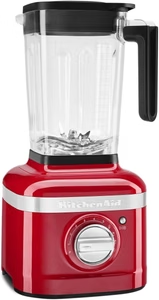
KitchenAid K400 Variable Speed Blender. Powerful performance with a stylish countertop presence. With its 1.5-peak HP motor and asymmetric blades, it can crush ice in less than 10 seconds with ease. The intuitive 5-speed dial, pulse setting and three preset programmes automatically adjust the speed for smooth results, perfect for tough ingredients, velvety smoothies and creamy soups.
- Pros: The personal jar that comes with the machine and the 56-ounce jar are both BPA-free; the Intelli-Speed Motor Control adjusts itself automatically for tough ingredients like kale and almonds; the Soft Start feature cuts down on splatter; and the self-clean cycle uses only water and soap.
- Cons: The jar is made of BPA-free Tritan plastic instead of glass, so it’s not perfect for people who only want glass blenders; the ribbed design of the jar can trap ingredients in the corners when making thick blends; it costs more than basic glass jar blenders even though it’s made of glass.
7. Best Stainless Steel Design: ZWILLING Enfinigy 64-oz Countertop Power Blender
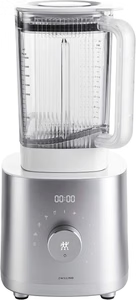
German engineering meets modern sleek design in the ZWILLING Enfinigy 64-oz Countertop Power Blender. Powered by the high performance AC motor and razor sharp German stainless steel winglet blades, it’s easy to take down the toughest ingredients. It has a large 64-ounce BPA-free Tritan jar, intuitive variable speed control, and versatile preset programmes, all of which work for exceptionally smooth, consistent results for large batches.
- Pros: Cool-touch stainless steel exterior (not painted plastic shell); 1400-watt AC motor with sharp German-made winglet blade; 6 pre-programmed settings; companion app with recipe database; long warranty typical of the Enfinigy line.
- Cons: The 64 oz jar is made of BPA-free Tritan, not glass; it’s priced at a premium compared to glass-jar competitors; app/recipe integration is a nice-to-have, not essential, and some buyers won’t use it.
8. Best Portable Non-Toxic Blender: Hamilton Beach Portable Blender with 14 oz BPA-Free Travel Jar
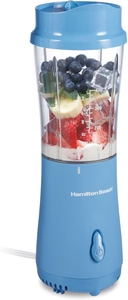
The Hamilton Beach Portable Blender is a quick, single-serve solution for the busy, on-the-go lifestyle. It easily blends smoothies, protein shakes and dressings with an efficient 175-watt motor and stainless steel blades. The 14 oz. BPA-free travel jar doubles as a drinking cup with a sip-through lid, and features simple one-touch pulse control and a compact design that fits standard car cup holders.
- Pros: BPA-free jar and lid. Tough stainless steel blades that can take on ice, frozen fruit and leafy greens. Jar doubles as a travel cup and fits most car cup holders. Dishwasher-safe parts. Affordable price point for a personal blender.
- Cons: Not glass. The trade-off for portability and lighter weight is a plastic jar. 300 watts peak power, so better for single servings than tough ingredients. Smaller 14 oz capacity means less batch flexibility.
9. Best Quiet Operation Pick: BLACK+DECKER Quiet Blender with 6-Cup Cyclone Glass Jar
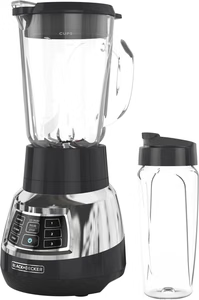
The BLACK+DECKER Quiet Blender, 6-Cup Cyclone Glass Jar, delivers powerful blending performance with a quieter kitchen environment. The device has an advanced noise reduction design; it is much quieter than traditional models. The volume of operation is reduced. With the 900-watt peak motor, the 6-cup glass jar is durable and with a Cyclone blending action, it pulls ingredients down to create smooth, consistent results every time.
- Pros: Cyclone jar made of real glass for fast vortex blending; Up to 30% faster blending, and less noise than standard PowerCrush models; 900W motor with serrated 6-tip blade; Comes with 24 oz personal jar for single servings.
- Cons: Included personal jar is Tritan plastic, not glass, so “low-plastic” is really only for the main jar; only 3 main speeds plus pulse (not as granular as 7+ speed competitors), and the sealed control panel is easy to wipe clean but not fully submersible.
10. Best High-Wattage Option for Tough Ingredients: Oster Extreme Mix Blender, 64oz Glass Jar
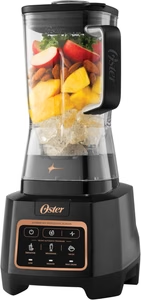
The Oster Extreme Mix Blender has a 64oz glass jar and delivers high-performance blending in a durable design, perfect for larger batches. Powerful reversible blade technology changes direction to prevent jamming and delivers a consistent, smooth blend for everything from smoothies to frozen drinks. Its heavy-duty motor will handle tough ingredients with ease for efficient food prep in any kitchen.
- Pros: 1600 watts of power with a 10-point titanium-coated blade stack for really tough ingredients like whole frozen fruit and ice; large 64 oz glass jar fits bigger households or batch smoothie prep; includes a 24 oz Blend-N-Go cup; 3 iBlend preset auto-programs make daily use simple.
- Cons: The big 64 oz glass jar is heavy and takes up a lot of counter and cabinet space. Because it’s such a high-wattage blender, it’s louder when running on the highest speed. The to-go cup is plastic, not glass, so if you want to avoid plastic when transporting your smoothie, be prepared to transfer it.
FAQ: Non-Toxic Blenders for Smoothies
Is a glass jar blender always better than a BPA-free plastic jar blender? To minimise plastic contact with food, yes, glass is inert and won’t leach anything regardless of heat, acidity or age. However, BPA-free Tritan copolyester (used by Vitamix, KitchenAid and Zwilling) is considered food-safe and does not contain the specific chemical, BPA, that most “non-toxic blender” searches are trying to avoid. The downside is that Tritan jars tend to be lighter, more impact-resistant, and better for travel or high-powered blending, while glass jars are heavier and can chip or crack if dropped.
Do stainless steel blender blades ever need to be replaced for safety reasons? Stainless steel blades will not leach or corrode during normal use, so you don’t need to change them for reasons of chemical safety. They are not toxic, but replace them if they become visibly dull, chipped or bent which affects blending.
Can I make hot soups in a glass jar blender safely? Most glass jar blenders that claim to be “thermal shock tested” or “shatterproof” (such as several models above) can handle hot liquids, but always consult the manufacturer’s maximum temperature guidelines first – pouring boiling liquid into any blender jar, glass or plastic, without heeding instructions can result in pressure build-up or cracking.
Are Vitamix and other high-end blenders worth it if the jar isn’t glass? Depends on what you value more. But if you’re trying to avoid any plastic food contact at all, the glass jar blender is the better option. If your main concern is BPA and you want pro-level performance for nut butters, hot soups, and super fibrous ingredients, then a BPA-free Tritan jar like Vitamix’s is a reasonable middle ground that many non-toxic living guides still recommend.
How do I clean a glass blender jar without scratching it? Most of the glass jars in this list are dishwasher safe, which is usually the easiest and safest way to clean. Avoid using abrasive scouring pads on the glass when washing by hand; a soft sponge and warm, soapy water are usually enough, especially if you blend with a little water and pulse right after use to loosen residue before it dries.
Is a higher-wattage blender automatically more “non-toxic”? No, wattage doesn’t matter for the toxicity of the materials, but it does matter for blending power and how well the blender handles tough ingredients like ice and frozen fruit. If you have a 700w glass jar blender and a 1600w glass jar blender but the same materials for the jar and blades, then they are equally “non-toxic”. The difference in wattage is performance only.
