

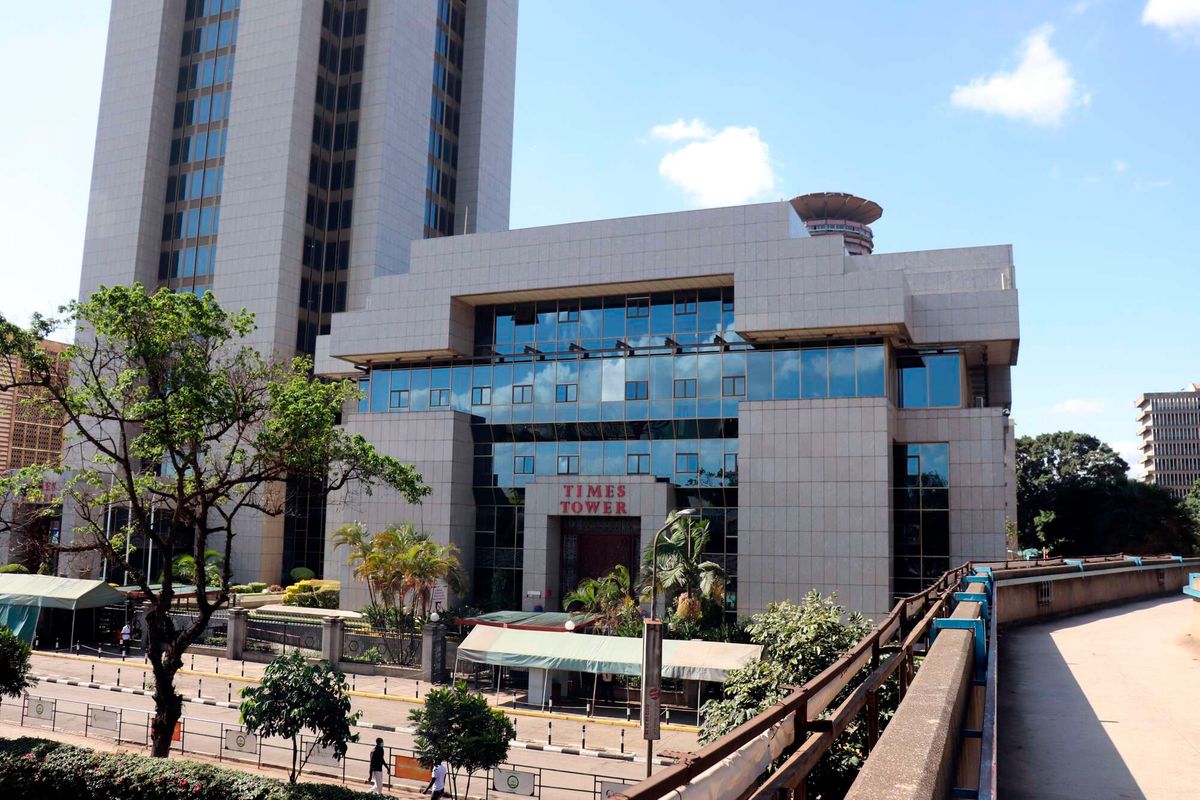
The Tax Appeals Tribunal has set aside a Sh780 million tax bill against solar home systems financier Bboxx Capital Kenya, ruling that Kenya Revenue Authority (KRA) failed to prove how it arrived at the disputed tax assessment.
However the tribunal ruled in favour of KRA that Bboxx’s customers were not merely renting solar equipment and the pay-as-you-go business model adopted by the company was subject to income tax on the business income earned therefrom.
It found that customers were paying for the solar systems in instalments with a view to eventually owning the systems upon completion of agreed payments, and thus the transactions were hire-purchase deals rather than leases.
The tax dispute started after KRA treated Sh1.53 billion in the company’s lease stock as under-declared credit sales and applied a 30 per cent margin, while also adding back a Sh33.7 million hire-purchase asset write-off.
Bboxx sells solar panels, lamps, batteries and related equipment through payment plans. Its audited accounts described the sales as cash and hire-purchase transactions.
KRA began auditing Bboxx’s tax affairs for 2018 to 2022 in November 2023. It later assessed Sh780 million in corporation tax for 2019, comprising Sh450.9 million principal tax and Sh329 million interest. KRA treated Sh1.53 billion in lease stock as under-declared sales and applied a 30 per cent margin. It also added back a Sh33.7 million asset write-off.
Bboxx objected, but KRA rejected the objection in September 2025, triggering an appeal at the tribunal. The company argued that ownership of the solar equipment remained with Bboxx while customers bore risks after receiving the systems.
Bboxx said its 2019 accounts recognised Sh23.5 million in upfront sales and Sh598 million in lease revenue, which it said had already been taxed. The Tribunal rejected Bboxx’s classification argument. It found that the contracts with customers contained a purchase price, down payment and final payment, with ownership addressed after completion of payments.
“A contract under which the customer pays a deposit and instalments towards an agreed purchase price was made with the intention of transferring ownership,” the tribunal said.
Even though Bboxx retained ownership of the solar systems while customers were still paying, the tribunal said this alone did not make the arrangements leases.
It found that the contracts referred to a purchase price, down payment and final payment, and did not require customers to return the equipment after completing the payments.
The tribunal also relied on Bboxx’s accounts, which stated that it had no finance leases and described the transactions as hire purchase.
It nevertheless rejected KRA’s calculation of the alleged under-declared income. It said the 30 percent margin had not been explained in the assessment, objection decision or KRA’s submissions.
“An unexplained figure is the antithesis of a judgment exercised upon available information,” the tribunal said, setting aside KRA’s decision.
It also found that KRA had applied the deemed sales on top of Sh621 million in revenue the company had already declared and paid tax on. KRA had not shown how much lease stock represented goods actually supplied during 2019.
Bboxx presented reconciliations, ledgers and movement schedules showing how lease stock was recognised as revenue. KRA did not rebut that evidence.
The tribunal, therefore, held that the Sh1.53 billion adjustments were “arbitrary and without a demonstrated factual foundation” and were not justified. The Tribunal dismissed both KRA’s estimation of the year’s income and the decision to add back the written-off assets, terming them as being without legal or factual foundation and unjustified.
“The tribunal finds that the respondent’s assessment of under-declared income of Sh1,534,762,601.00, computed by applying an unexplained 30 percent margin to the appellant’s lease stock without eliminating revenue already recognised and taxed, was arbitrary and without a demonstrated factual foundation, and therefore, not justified,” said the tribunal in its ruling.
It also rejected the Sh33.7 million asset write-off adjustment. The assets had historical cost and accumulated depreciation of the same amount, leaving them with nil book value.
It said removing fully depreciated assets from Bboxx’s register created neither a gain nor loss, and KRA identified no deduction requiring an add-back.
The Bboxx case is not the first time that the taxman arbitrarily used a margin to determine a taxpayer’s income and subsequent tax liability. In August 2024, the authority slapped a petroleum distributor, Koriyo Horse Investments Limited, with a Sh32.9 million tax bill plus interest and penalties after applying a five percent markup on its cost of sales.
In Koriyo the case which was decided in October 2025, the tribunal held that the estimation using mark-ups and cost of sales is only permissible when adequate records are not maintained or produced by the taxpayer. In another similar case decided in September 2024, the tribunal again sided with the taxpayer, stating that even in the absence of record, an estimate must be backed by concrete facts and verifiable economic models.
