

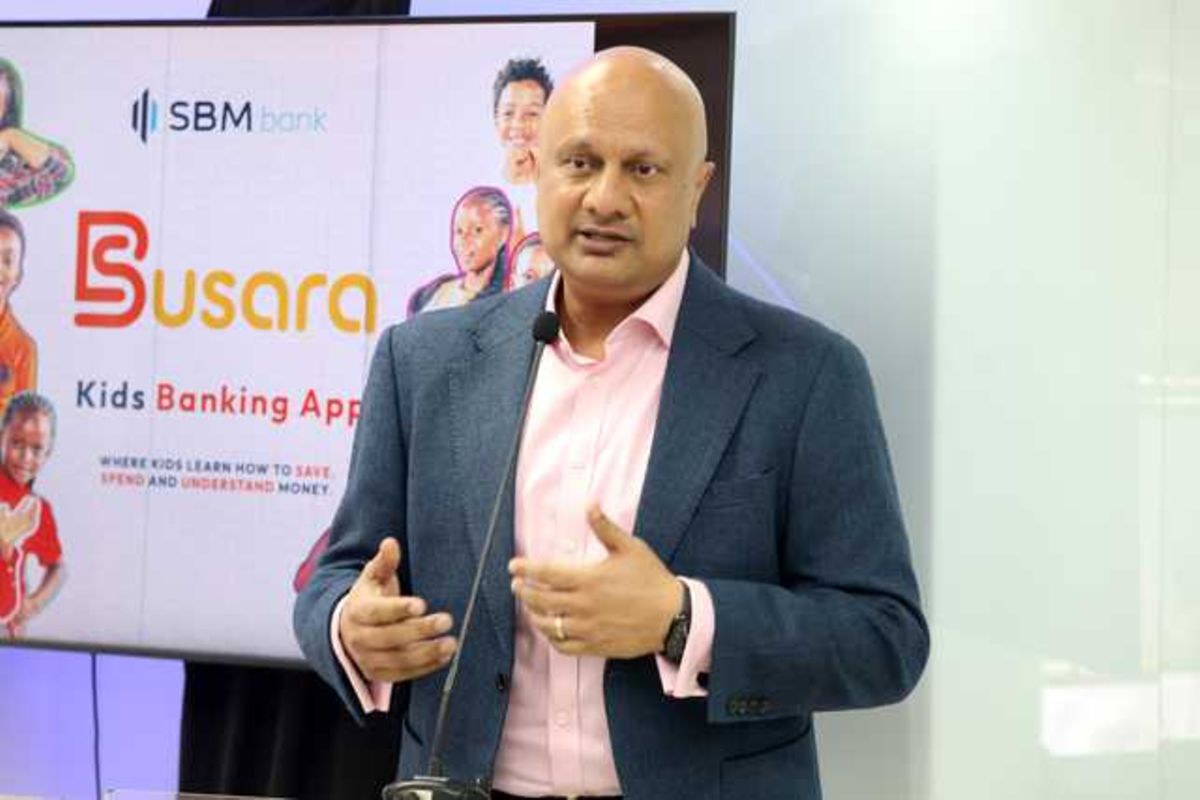
SBM Holdings of Mauritius has made two capital injections in the last six months in its subsidiary SBM Bank Kenya totalling Sh814 million to support business growth.
The holding company injected Sh400 million in the latest investment, increasing its paid-up capital to Sh4.75 billion as at the end of June 2026, from Sh4.35 billion in March.
This followed a Sh414 million injection between January and March 2026, pushing the parent firm’s total investment in the Kenyan unit to Sh814 million this year.
“The capital injection during the first six months of 2026 is driven by two strategic objectives – business growth support and increased capital adequacy buffer,” the bank said in a statement.
“SBM now has a much stronger foundation from which to grow. Our task is to convert this foundation into sustainable value for customers, shareholders, employees and the Kenyan economy.”
SBM Bank has been operating on thin capital adequacy ratios in the last year. Capital ratios dictate the size of business a lender can take.
The bank’s total capital to total risk-weighted assets had fallen to 14.7 percent in March, being 0.2 percentage points above the statutory minimum of 14.5 percent. The latest capital injection resulted in the headroom expanding to 1.4 percent.
Its core capital to total deposit ratio stood at 9.6 percent as at the end of June, compared to a minimum requirement of eight percent. The bank had a core capital headroom of 0.7 percent at the end of March.
The bank, which had an accumulated loss of Sh2.1 billion as at the end of June, has not been paying dividends, instead using retained earnings to boost its core capital.
It posted an 88.1 percent increase in net profit to Sh380.1 million in the half-year ended June 2026, riding on lower deposit costs.
The deposit base expanded by 14.1 percent in the first six months of the year to Sh94 billion while its loan book grew by 15.1 percent to Sh54 billion, pushing the bank to seek additional capital from its owners in order to remain compliant with regulatory capital requirements. The management had in the past said it preferred to keep thin capital headroom to save on costs.
“We try to optimise capital because having a big buffer means you are underutilising capital,” SBM’s Chief Executive Officer, Bhartesh Shah, told the Business Daily early this year.
This is the fourth consecutive year the parent firm is injecting additional capital in the Kenyan subsidiary, underlining ready support for the unit.
Last year, SBM Holdings injected Sh405 million in the bank, which followed an Sh819 million capital infusion in 2024 and Sh417 million the previous year.
SBM Holdings entered the Kenyan market in May 2017 through the acquisition of Fidelity Commercial Bank for a token $1 (Sh129) consideration in a rescue deal and renamed it SBM Bank Kenya, before making a Sh2.6 billion capital injection.
In August 2018, the bank acquired certain assets and liabilities of the then-under receivership Chase Bank Kenya for Sh465,000 and added them to SBM Bank Kenya.
SBM is banking on tech-driven services to grow its transaction numbers and reach more customers.
These include free PesaLink transfers of up to Sh1 million through the Mfukoni mobile and online banking platforms.
