

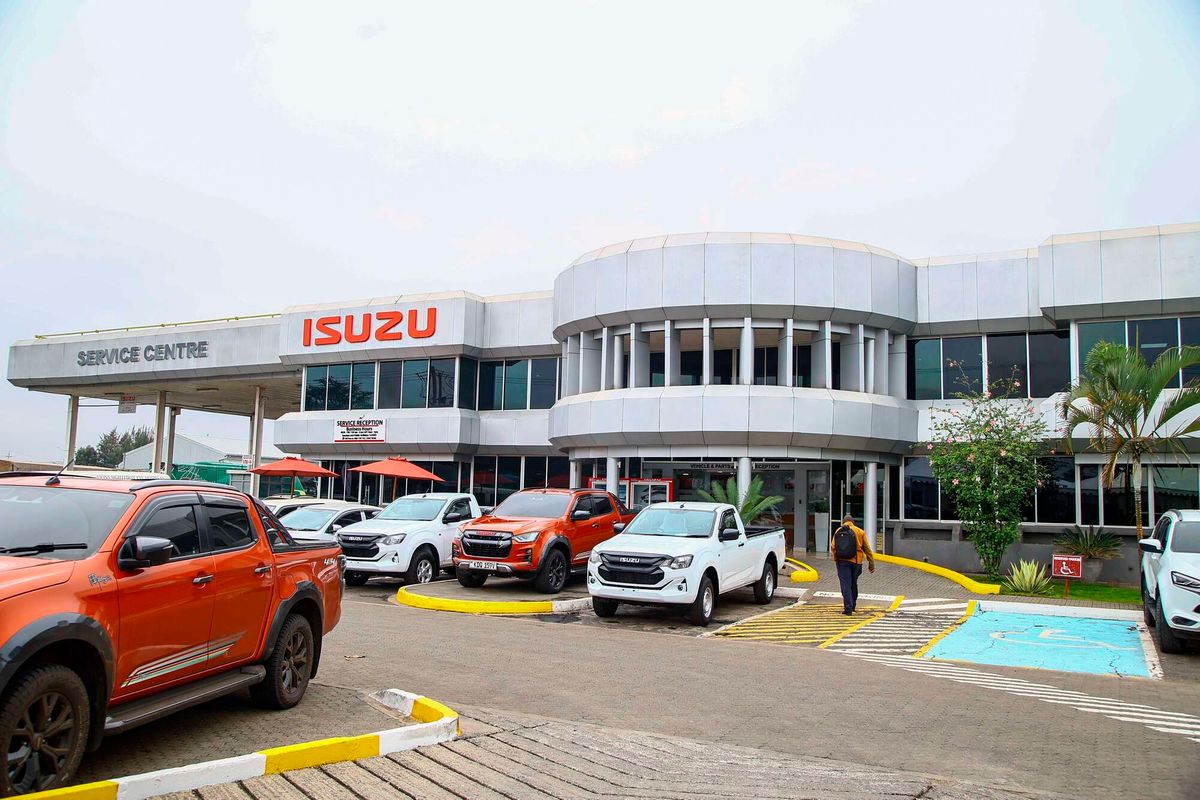
Sales of Isuzu East Africa’s sport utility vehicles (SUVs) rose by 483.3 percent to 105 units in the half-year ended June 2026 as local assembly made the car cheaper.
Data from the Kenya Motor Industry Association shows sales of the seven-seater Isuzu mu-X rose from 18 units a year earlier.
“We lowered the price but also added more features to the mu-X once we started local assembly,” a source at Isuzu told the Business Daily.
“This has seen an increase in demand. We have more customers in the queue. Our target is the 10,000 Kenyans who spend Sh8 million to Sh10 million on used SUVs,” the source added, noting that the mu-X comes with a five-year warranty.
Isuzu aims to sell up to 1,000 units of the SUV – which is offered with a 1.9-litre diesel engine – per annum in the medium term.
Vehicle parts headed to assembly are exempt from the 35 percent import duty on fully-built imports. They are also exempt from excise duty, which is set at 20 percent, 25 percent and 35 percent, depending on engine size and fuel type for internal combustion vehicles, which dominate the roads.
Assemblers also benefit from paying an Import Declaration Fee of 2.5 percent compared to the standard 3.5 percent. They pay a lower Railway Development Levy of 1.5 percent compared to the standard rate of two percent.
These incentives can lower the cost of vehicles by millions of shillings, giving assemblers the headroom to price their models more competitively or enjoy higher margins.
CFAO Mobility Kenya dropped the price of the Toyota Fortuner from Sh13.2 million to Sh10 million after it started assembling the SUV in Mombasa in 2023.
Some used car dealers are selling eight-year-old Toyota Fortuner models from Sh6.5 million, indicating the growing competitiveness of assemblers.
The tax incentives are designed to help the assemblers boost production and create jobs, with the government further offering them support under the Buy Kenya-Build Kenya strategy.
Seizing the advantages, formal dealers have moved to reduce the units and number of models they import fully-built from Japan, South Africa and other markets.
The firms in June sold 1,476 vehicles that were assembled locally, representing 92.3 percent of total new vehicle sales in the month.
The share of locally assembled vehicles has risen from below 70 percent six years ago.
Dealers are betting on the expansion of current incentives, alongside delayed regulations – such as a ban on imports of commercial vehicles – to grow their factory-floor operations.
The new vehicle dealers have a combined market share of about 15 percent when viewed against total car imports, official data shows.
Second-hand imports of Japanese car brands, led by Toyota models, continue to dominate sales.
