

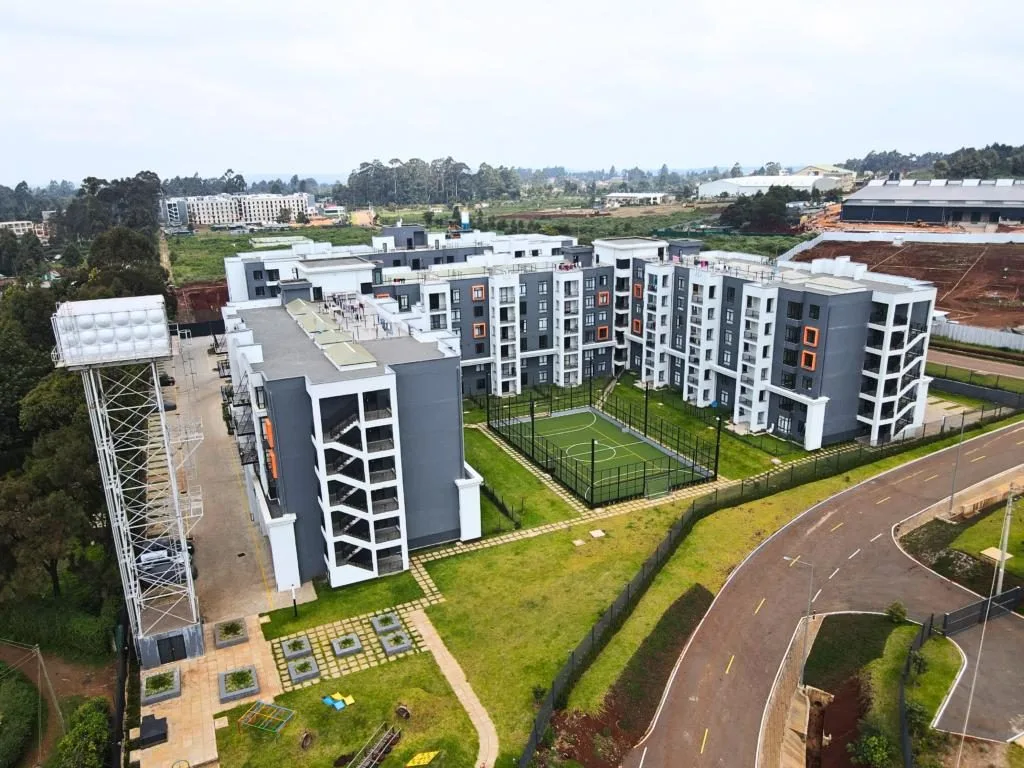
International Housing Solutions (IHS) Kenya has launched a Sh1 billion residential development in Tilisi, adding 240 housing units to the market as private developers continue to expand supply amid Kenya’s persistent housing shortage.
The project, which is called Muzi Salama, has apartments with two and three bedrooms that are aimed at middle-income homebuyers and investors.
This is IHS Kenya’s second residential project, and it’s part of the company’s plans to grow in the housing market in the country.
The launch comes as Kenya continues to grapple with a housing deficit driven by rapid urbanization, population growth, and rising demand for affordable and quality homes.
As part of its larger housing plan, the government has made affordable housing a priority. However, analysts say that more private sector investment is still needed to close the supply gap, especially for middle-income households.
Speaking during the launch, IHS Kenya Managing Director Kioi Wambaa said the company views residential development as a long-term investment that supports both economic growth and community development.
“We see housing as a catalyst for economic and social transformation. Every development we undertake is designed to leave a lasting impact by delivering quality homes and creating communities where families can prosper.”
“Muzi Salama reflects our confidence in Kenya’s future and our commitment to delivering homes that are well-built, professionally managed, and designed to retain value for generations.”
According to the company, the development is expected to create employment opportunities during construction, support local suppliers, and attract additional private investment into Kenya’s residential property market.
The project has also been designed to pursue EDGE (Excellence in Design for Greater Efficiencies) certification through energy- and water-efficient features aimed at reducing utility costs for homeowners while promoting sustainable urban development.
Apartment prices start from Sh6.55 million for two-bedroom units and Sh8.6 million for three-bedroom apartments.
The project builds on IHS Kenya’s earlier Muzi Stawi development at Garden City, which the company says is nearing full occupancy, reflecting continued demand for professionally managed residential communities.
According to IHS Kenya, its goal is to build 3,000 homes by 2030. However, reaching that goal will depend on the market, the availability of financing, and the continued demand in Kenya’s residential property market.
Kenya’s housing market continues to face a substantial supply-demand imbalance, with rapid urbanization and population growth increasing pressure on available housing stock.
While government-led affordable housing programmes have accelerated in recent years, private developers remain a key source of new housing, particularly for middle-income buyers who often fall outside subsidized housing programmes but still face affordability challenges.
Sustainable building standards such as EDGE certification are also gaining traction as developers seek to lower long-term operating costs for homeowners while meeting environmental objectives.
