
The education landscape is transforming rapidly to meet the demands of the 21st century. As traditional curricula give way to contemporary approaches, educators, parents, and policymakers face the challenge of choosing the best education curriculum for 2025. This article explores how STEM, coding, and project-based learning are shaping the future of education, equipping students with the skills they need to thrive in a dynamic world.
1. Traditional vs. Contemporary Curricula: An Overview
Traditional Curriculum
The traditional education system is rooted in structure and discipline, focusing on:
- Core Subjects: Language, mathematics, history, and science.
- Memorization: Emphasis on rote learning and recall-based assessments.
- Standardized Testing: Uniform evaluation methods for all students.
- Teacher-Centered Approach: The teacher as the primary authority in the classroom.
While this approach ensures foundational knowledge, it often lacks flexibility and relevance to real-world applications.
Contemporary Curriculum
Modern curricula embrace innovation and adaptability, emphasizing:
- Interdisciplinary Learning: Integration of subjects to solve complex problems.
- Skills Development: Critical thinking, collaboration, and communication.
- Technology Integration: Use of digital tools to enhance learning.
- Student-Centered Approach: Encouraging exploration and personalized learning paths.
Contemporary frameworks are designed to prepare students for the demands of the digital economy and a globalized world.
2. The Rise of STEM Education
STEM (Science, Technology, Engineering, and Mathematics) education has gained prominence for its focus on problem-solving, innovation, and creativity.
Why STEM Matters:
- Job Market Alignment: STEM fields dominate high-growth industries like tech, healthcare, and engineering.
- Hands-On Learning: Encourages experimentation and application of concepts.
- Critical Thinking: Solving real-world problems fosters analytical skills.
- Gender Inclusion: Initiatives promote greater participation from underrepresented groups, including women and minorities.
How to Incorporate STEM:
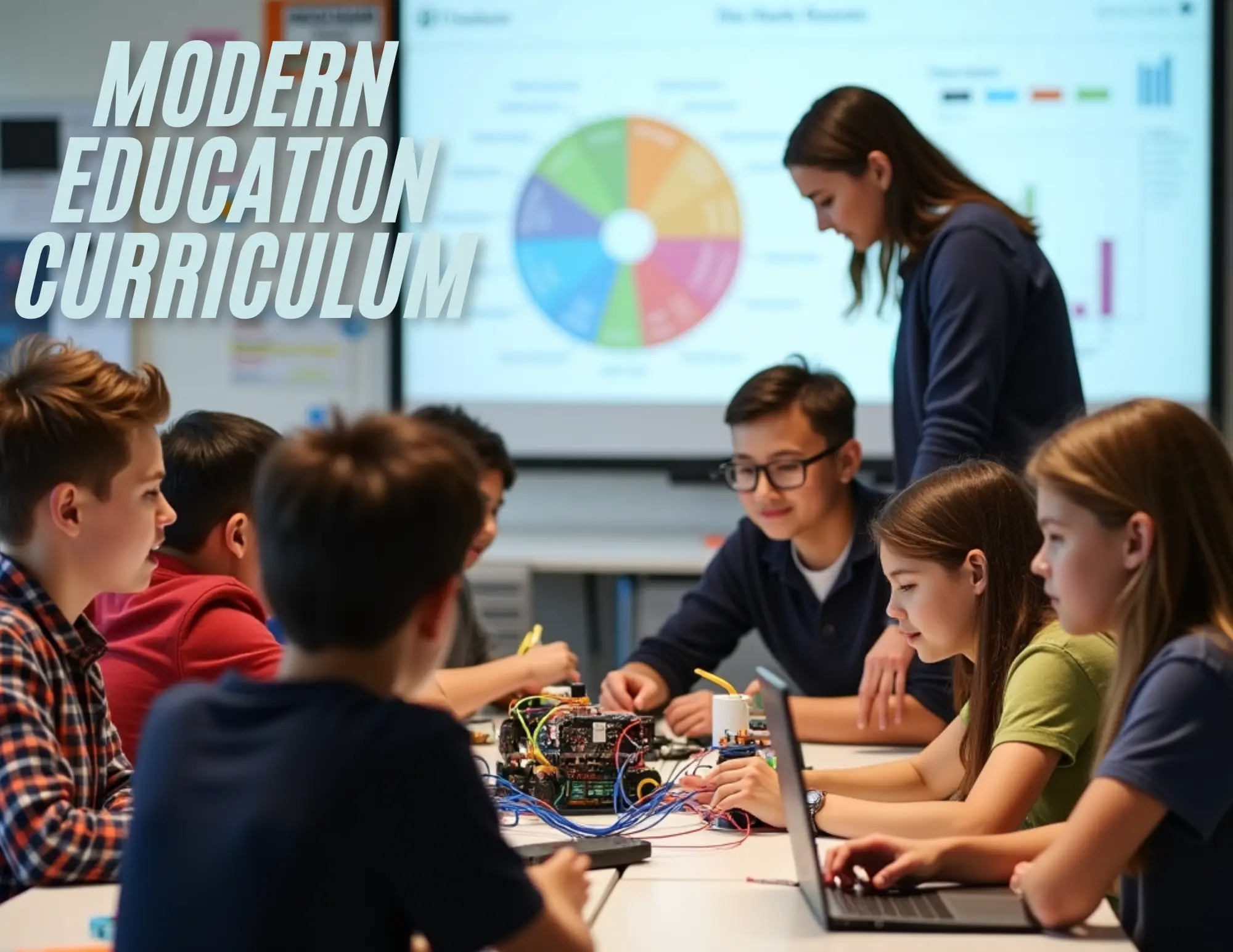
Schools can adopt STEM labs, robotics clubs, and interdisciplinary projects to ignite students’ interest in these fields.
3. The Importance of Coding in Modern Education
Coding is no longer just a skill for aspiring software developers; it’s becoming a core competency for all students.
Why Teach Coding?
- Logical Thinking: Coding trains the brain to think in structured, logical steps.
- Creativity: Building apps, games, and websites encourages imaginative solutions.
- Career Readiness: Coding is a prerequisite for many high-paying jobs in the digital era.
- Global Language: Often referred to as the “language of the future,” coding transcends borders and industries.
Popular Coding Platforms for Students:
- Scratch: Introduces young learners to programming through visual blocks.
- Python: A beginner-friendly language widely used in data science and AI.
- Code.org: Provides interactive lessons tailored for school-aged learners.
4. Project-Based Learning (PBL): Bridging Theory and Practice
Project-Based Learning (PBL) engages students in meaningful, real-world projects. Instead of learning concepts in isolation, students apply their knowledge to solve problems collaboratively.
Benefits of PBL:
- Engagement: Real-world relevance motivates students to learn.
- Skill Building: Promotes teamwork, time management, and decision-making.
- Interdisciplinary Knowledge: Students explore topics that span multiple subjects.
- Assessment Through Action: Students are evaluated based on their ability to create and present solutions, not just exams.
Examples of PBL Activities:
- Designing eco-friendly housing models using geometry and environmental science.
- Creating a community app to address local issues like waste management.
- Analyzing historical events to propose solutions for contemporary social challenges.
5. Comparing Traditional and Contemporary Curricula
| Aspect | Traditional Curriculum | Contemporary Curriculum |
|---|---|---|
| Focus | Knowledge acquisition through memorization. | Skills development and real-world applications. |
| Methodology | Teacher-centered, passive learning. | Student-centered, active exploration. |
| Assessment | Standardized tests and grades. | Portfolios, presentations, and collaborative projects. |
| Technology Use | Minimal, often limited to basic computer skills. | Extensive, integrating AI, AR/VR, and digital tools. |
| Preparedness for Future | Limited alignment with emerging industries. | Strong alignment with modern workforce needs. |
6. Recommendations for Educators and Schools
To create a curriculum that addresses the needs of modern students, consider the following steps:
- Integrate Technology: Equip classrooms with tools like interactive whiteboards, tablets, and virtual labs.
- Adopt Flexible Frameworks: Combine traditional and contemporary methods for a well-rounded approach.
- Train Teachers: Provide ongoing professional development for integrating new teaching techniques.
- Engage Students: Foster curiosity by incorporating their interests into the curriculum.
- Evaluate Regularly: Continuously assess and update the curriculum to stay relevant.
Conclusion
The best education curriculum for modern students balances foundational knowledge with future-ready skills. By embracing STEM, coding, and project-based learning, schools can empower students to thrive in an ever-changing world.
As education evolves, the focus must shift from rote memorization to fostering creativity, collaboration, and critical thinking. For educators, parents, and policymakers, the goal is clear: prepare today’s learners for tomorrow’s challenges.
Empower your students for the future. Start building an education curriculum that inspires and equips them for success!
