

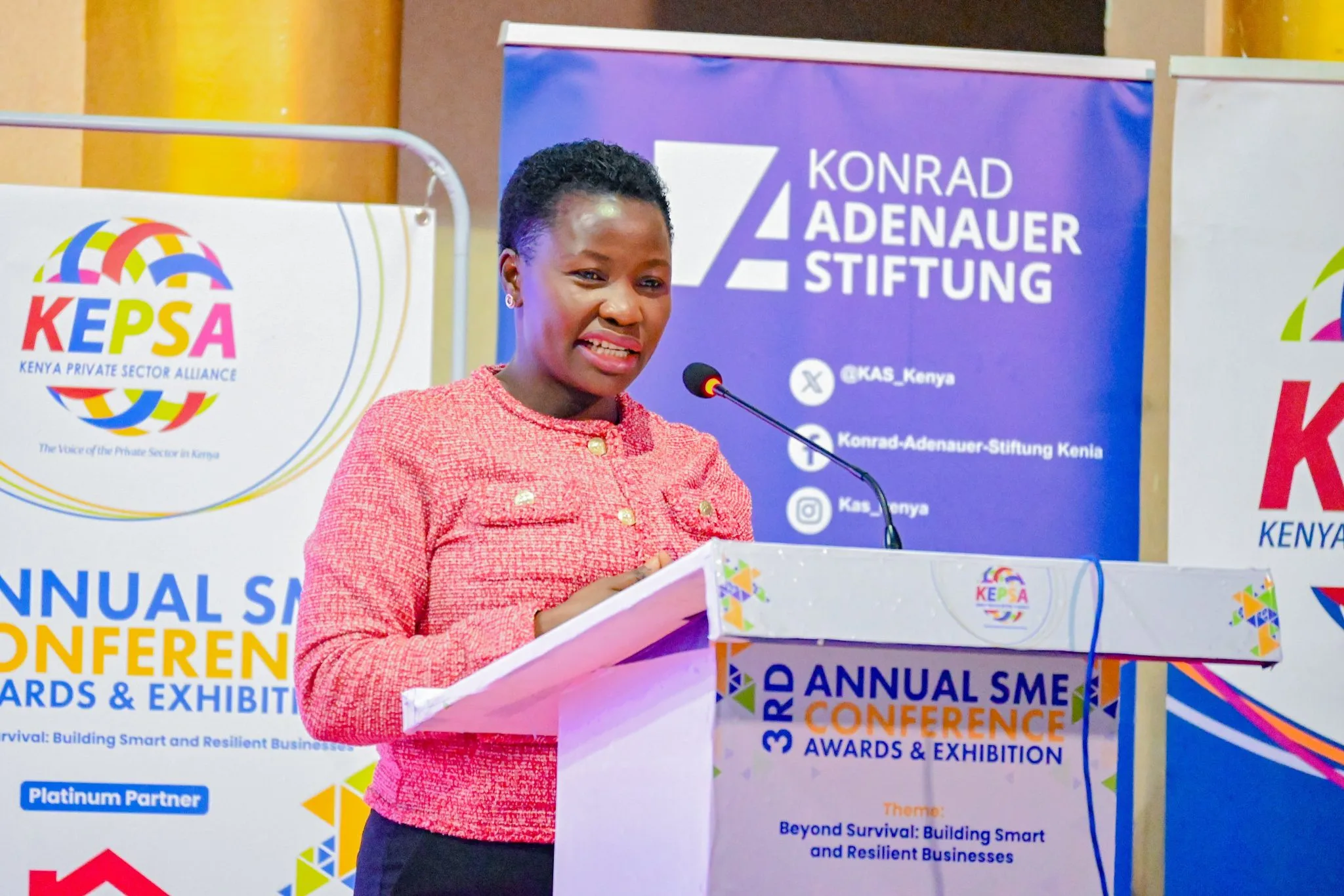
The government is positioning artificial intelligence (AI) as a key driver of productivity, innovation and competitiveness for Kenya’s micro, small and medium enterprises (MSMEs) as businesses increasingly embrace digital technologies.
Principal Secretary for the State Department for Micro, Small and Medium Enterprises Development Susan Auma Mang’eni said the government has developed a national AI strategy aimed at helping businesses and entrepreneurs adopt the technology to improve efficiency, lower costs and unlock new economic opportunities.
Speaking on the sidelines of the Third Annual SME Conference, Awards and Exhibition organised by the Kenya Private Sector Alliance (KEPSA), Mang’eni said the government’s focus extends beyond regulating AI to integrating it into business operations and industrial development.
“Our strategy is to see how best we can mainstream AI in our productivity, in our competitiveness and in the efficiency of our work environment.”
“We have that strategy to support it, and to me that shows that we are ready. It will not find us unprepared.”
She said Kenya’s established digital ecosystem, underpinned by widespread adoption of mobile technology and innovation, places the country in a strong position to benefit as AI becomes more integrated across industries.
According to Mang’eni, the government wants MSMEs and startups to leverage AI to improve productivity, streamline operations and expand into new markets.
She added that AI will also support Kenya’s industrialisation agenda by helping manufacturers improve efficiency and develop higher-value products for regional and international markets.
Beyond AI, Mang’eni said the government is investing in digital infrastructure, fibre connectivity and innovation hubs while supporting entrepreneurs through initiatives such as the National Youth Opportunities Towards Advancement (NYOTA) programme, which aims to nurture new businesses.
She said combining technology adoption with entrepreneurship and value addition will strengthen Kenya’s position as a regional innovation hub and improve the competitiveness of local enterprises under the African Continental Free Trade Area (AfCFTA) and other international markets.
Her remarks come as businesses increasingly adopt AI-powered tools to automate operations, improve productivity and enhance competitiveness. At the same time, governments work to develop policy frameworks that promote innovation and manage emerging risks.
