

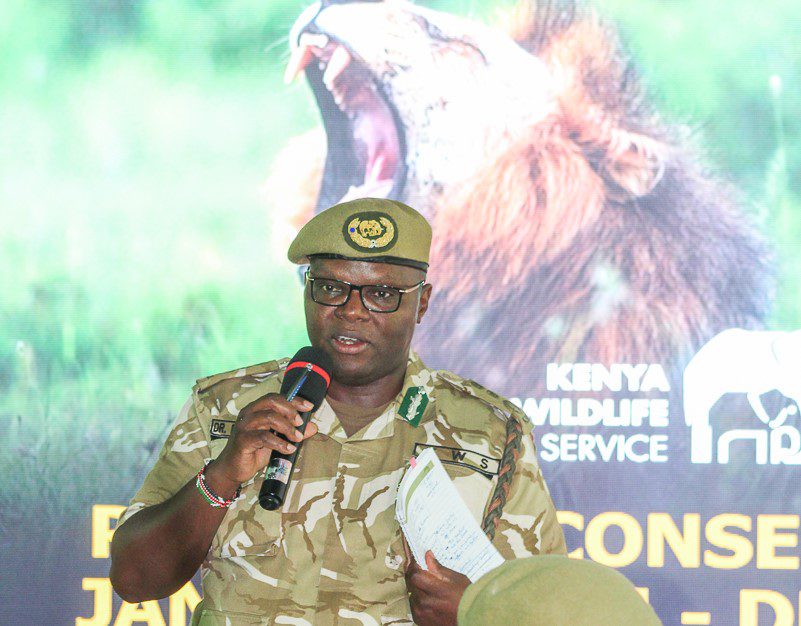
Despite a heavily contested attempt by the Kenya Wildlife Service (KWS) to increase park entry fees, Kenya’s tourism sector has demonstrated remarkable resilience. Revenues generated from admission to national parks, reserves, sanctuaries, and marine protected areas reached Sh7.92 billion in the fiscal year that ended in June 2025, indicating positive growth.
Revenue collected by the State Department for Wildlife during the 2024–2025 financial year reached Sh7.92 billion, surpassing both the government’s target and collections from previous years. This figure notably exceeded the Sh5.37 billion collected in 2022–2023 and the Sh7.74 billion (which itself was above the Sh7.53 billion target) collected in 2023–2024, as reported to the National Treasury.
The Kenya Wildlife Service (KWS) has consistently exceeded its visitor targets, as demonstrated by the most recent figures. In the year under review, KWS recorded 3.38 million visitors, surpassing its 3.3 million goal. This performance continues an upward trend: the prior year saw 3.18 million visitors against a 2.7 million target, and the year before that recorded 2.4 million visitors, exceeding the 2.1 million goal.
Officials attribute the improvements to several factors: the digitization of park payments via eCitizen and TouristTap, a recovery in tourism post-pandemic, improved marketing efforts, and the renovation of park amenities, including camps and guesthouses.
The Kenya Wildlife Service (KWS) sparked controversy with its mid-2025 draft proposal, Wildlife Conservation and Management (Access and Conservation Fees) Regulations, 2025. The draft proposal aimed to raise park and conservation fees for the first time in eighteen years to address a substantial KSh 12 billion annual funding deficit, despite the organization’s strong revenue performance.
The proposed fee hikes were significant. For example, admission to Nairobi National Park was set to increase from Sh430 to Sh1,000 for residents and from $43 to $80 for international visitors. Similarly, fees for high-end parks such as Amboseli National Park and Lake Nakuru National Park would rise to Sh1,500 for residents and $90 for visitors.
However, the proposed increases drew outrage from tour operators and other stakeholders who argued that the move would harm Kenya’s competitiveness in the global safari tourism market. This opposition culminated in the Kenya Tourist Federation filing a petition, which successfully secured a court injunction in early October. This injunction halted the implementation of the new fee structure pending further court hearings.
Despite a legal deadlock, Kenya’s wildlife tourism remains robust, with current fees, along with service improvements and payment reforms, supporting high profitability, as shown by consistent increases in visitor numbers and revenue. The shift to digitized ticketing and payments seems to have boosted compliance and broadened the customer base, attracting more domestic visitors.
So, improving things like guesthouse facilities, making entry processes easier, and encouraging local tourism might be just as important as changing fees to help raise more money for conservation.
In conclusion,
Kenya’s tourism sector, driven by millions of annual visitors to its wildlife parks, has shown remarkable resilience, achieving record revenue despite ongoing legal challenges related to fee hikes. Specifically, park-entry revenue reached Sh7.92 billion in the 2024–2025 period. This robust financial performance highlights the success of enhanced payment systems and a growing global and local appreciation for Kenya’s natural wildlife. The strong revenue provides the Kenya Wildlife Service (KWS) and other stakeholders with valuable time to develop a more sustainable and balanced strategy for wildlife management. However, the high cost of conservation means that funding shortfalls remain a persistent issue.
