

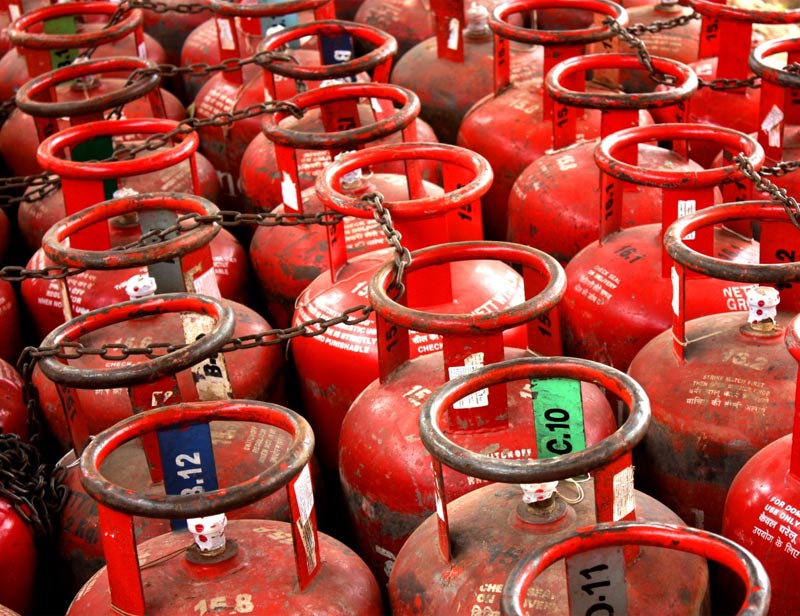
The prices of cooking gas in Kenya will hit a six (6) year high today. The development is as a result of the Treasury reintroducing a 16 percent Value Added Tax (VAT) on the commodity a decision which is being seen as an added inconvenience on expensive energy like electricity and fuel.
Households in Kenya will now pay not less than 350 Kenyan Shillings more for the 13 Kilogram (KG) cooking gas that is expected to start retailing at an average of 2,600 Kenyan Shillings. Said price level was last experienced in March of 2015.
The decision is in line with the Finance Act which reimplemented the Value Added Tax (VAT) on Liquefied Petroleum Gas (LPG). The Finance Act however delayed the levy for a year up until July of this year as a result of numerous concerns over its effect on the cost of living.
The Kenya Revenue Authority (KRA) has made it known that it will be imposing the 16 percent Value Added Tax (VAT) at the beginning of the new financial year in what is setting up to further move the commodity out of the reach of a number of households. Most of which are already struggling with severe reductions in income streams.
The Kenya Revenue Authority (KRA) stated via an email response to Business Daily Africa that, “The effective date of the amendment is 1st July 2021. This means that the supply of liquefied petroleum gas will be subject to VAT at standard rate of 16 percent from 1st July, 2021.”
The reimplementation of the Value Added Tax (VAT) is coming at a time when the prices of Crude Oil have continued to reach new highs which have in turn put even more pressure on the costs of Liquefied Petroleum Gas (LPG).
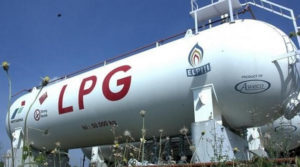
The increased cost of cooking gas in Kenya is expected to further contribute to an increase in energy prices which have already become a not so minor challenge for the Kenyan Government. The government has over the past three (3) months moved to provide fuel subsidies so as to help pacify the public’s displeasure over a monthly review that would have resulted in costs getting pushed even more to historical highs.
On the 30th of June 2021 the nation’s inflation increased to a sixteen (16) month high of 6.32 percent on expensive food, electricity and fuel during a period when various employers including the Kenyan Government have put a pause on the increment of wages.
The Chairperson of Petroleum Outlets Association of Kenya; Martin Chomba stated that, “We must remit a 16 percent VAT for every cylinder sold or refilled. It is natural that we will pass the added cost to consumers.”
Despite the volatility in the crude oil market worldwide the prices of cooking gas did not really change a lot over the past year. This is especially interesting considering the fact that this was during the period where the prices of Petrol swung between a low of 89.10 Kenyan Shillings per litre in June of 2020 to its current high of 127.98 Kenyan Shillings per litre.
Since June of 2016 households in Kenya have been benefiting from low prices of cooking gas after the Treasury decided to discontinue the Value Added Tax (VAT) on Liquefied Petroleum Gas (LPG) in order to reduce costs and also boost its adoption by the lower income class who relied on charcoal as well as kerosene for their cooking needs.
By October of the same year (2016) the prices of the thirteen (13) Kilogramme (KG) cooking gas dropped to below to 2,000 billion Kenyan Shillings following the Treasury’s decision to stop the sixteen (16) Value Added Tax (VAT).

Unlike other petroleum products the prices for Liquefied Petroleum Gas (LPG) in Kenya, are not controlled. As a result the reimplemented Value Added Tax (VAT) on the commodity is causing worries that dealers countrywide might end up exploiting the market forces to their advantage even as international prices of crude continue to increase.
In 2010 the energy regulator began to control the prices of Kerosene, Petrol, and Diesel in order to protect consumers from overtly high prices. The decision was reportedly as a result of dealers exhibiting cartel like behaviors amongst themselves.
Cooking gas was however left to the market forces of demand and supply to determine its prices.
It is expected that the increase in the cost of Liquefied Petroleum Gas (LPG) will put an added strain on families that are struggling to make ends meet as a result of a lack of jobs in addition to reductions in earnings as a result of the still ongoing Coronavirus pandemic.
According to its dealers the increase of 350 Kenyan Shillings on the prices of Liquefied Petroleum Gas (LPG) will be its largest in more than twenty (20) years.
On social media Kenyans have continued to voice their concerns over the mounting public debt (which led to a petition to the International Monetary Fund (IMF) to stop providing more loans to East African nation of Kenya), lesser employment opportunities, as well as the reduction in cash flow.
The petitions by Kenyans occurred just days after the International Monetary Fund (IMF) approved a 2.34 billion United States Dollar loan (around 250 billion Kenyan Shillings) on the 2nd of April 2021. The loan is intended to help the country establish an effective response to the ongoing Coronavirus pandemic, while also addressing its vulnerabilities with regards to debts.

At the beginning of the Coronavirus pandemic Kenya was really hit hard. Its economy has however been picking up after it experienced a slight contraction of 0.1 percent in 2020. This is according to the International Monetary Fund (IMF).
The reimplementation of the Value Added Tax (VAT) on Liquefied Petroleum Gas (LPG) is coming despite numerous attempts by a number of lawmakers, industry lobbyists, and the Petroleum Institute of East Africa (PIEA) to delay or potentially stop it from happening.
Last week the Speaker of the National Assembly; Justin Muturi backed the House committee which had rejected a proposal to delay the tax and stated that it would cause revenue collections to be delayed while also negatively affecting the financing of development projects in the year, and up until June next year (2022).
On Thursday the 24th of June 2021 when the Parliament debated and voted on the Finance Bill, 2021 Mr. Justin Muturi ruled that, “The proposals would have far-reaching implications on revenue collection and would greatly affect the implementation of the national budget.”
The Dagoretti South Member of Parliament (MP); John Kiarie had proposed to delay the reimplementation of the Value Added Tax (VAT) on Liquefied Petroleum Gas (LPG) to the 1st of July 2024 as consumers are battling with the financial difficulties brought on by the still ongoing Coronavirus pandemic.
How informative was this article? Are there any other news topics, categories, or How To topics, that you would like us to write on? Feel free to reach out to Mpesa Pay in the comment section.
